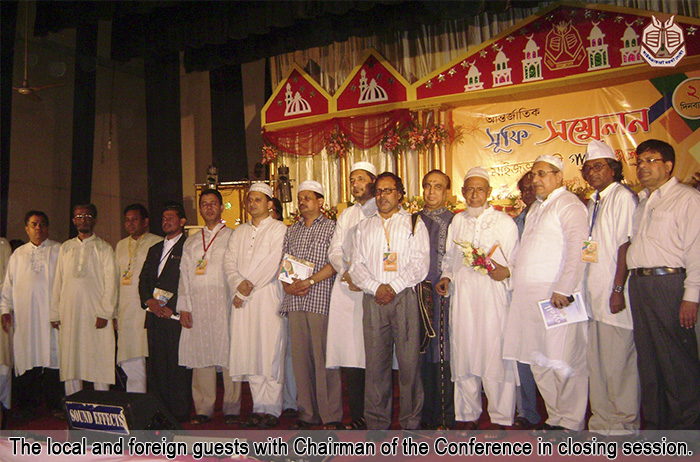
To examine the spiritual and ethical principles of Tasawwuf and their role in promoting peace, tolerance, and social cohesion.


SZHMT 8th International Sufi Conference 2026
Tasawwuf, Social Harmony and World Peace
Organized by the Shahanshah Hazrat Syed Ziaul Huq Maizbhandari (K.) Trust (SZHMT)
Important Dates
Abstract Submission Begin:
01 April 2026
Abstract Submission Ends:
30 June 2026
(Abstract should be between 250-300 words)
Abstract Selection Notification:
15 July 2026
Full Paper Submission Deadline:
30 September 2026
Final Selection Notification:
01 November 2026 - 15 November 2026
Conference Dates:
8 - 10 December 2026
Conference Overview
T he 8th International Sufi Conference 2026, organized by the Shahanshah Hazrat Syed Ziaul Huq Maizbhandari (KA) Trust, is a global academic and spiritual gathering centered on the theme "Tasawwuf, Social Harmony and World Peace." The conference brings together scholars, researchers, Sufi thinkers, and spiritual leaders from diverse cultural and intellectual backgrounds to explore the contemporary relevance of Tasawwuf in addressing the moral, social, and spiritual challenges of the modern world. The event is being held to commemorate the bicentenary (200th birth anniversary) of the revered founder of the Maizbhandari Sufi Order, Gausul Azam Shah Sufi Hazrat Syed Ahmad Ullah Maizbhandari (KA), whose spiritual legacy has profoundly shaped the Sufi tradition in South Asia.
Inspired by the luminous teachings of Shahanshah Hazrat Syed Ziaul Huq Maizbhandari (KA) and the enduring Maizbhandari heritage, the conference highlights the foundational values of Sufism-divine love (Ishq-e-Ilahi), compassion, tolerance, justice, pluralism, service to humanity (Khidmat-e-Khalq), and moral-spiritual accountability. These timeless principles offer meaningful responses to contemporary global challenges such as social division, inequality, conflict, and extremism. Through scholarly dialogue and collaborative engagement, the conference emphasizes Sufism's vital role in promoting interfaith harmony, inclusive societies, and sustainable development, while aligning with the United Nations Sustainable Development Goals (SDGs), particularly SDGs 16, 10, and 17, alongside goals related to quality education, gender equality, and sustainable communities.
SZHMT INTERNATIONAL SUFI CONFERENCE 2026
Organized by
Shahanshah Hazrat Syed Ziaul Huq Maizbhandari (KA) Trust (SZHMT)
Conference dates
8-10 December 2026
Location
Dhaka,
Bangladesh
szhmt.suficonf@gmail.com
Phone
+8801872288655
Objectives of the 8th International
Sufi Conference 2026
01
02
To explore how fundamental Sufi values—such as divine love, compassion, justice, pluralism, humanitarian service, and moral responsibility—can contribute to addressing contemporary issues including conflict, inequality, extremism, discrimination, and environmental challenges.
03
To encourage academic dialogue, international collaboration, and partnerships among Sufi scholars, interfaith representatives, and civil society organizations across the globe.
04
To highlight the contributions of the Maizbhandari Sufi tradition in cultivating spirituality, social welfare, and community development.
05
To demonstrate the connection between Sufi teachings and the United Nations Sustainable Development Goals (SDGs), especially in the areas of peace, equality, education, sustainability, and global cooperation.
06
To transform Sufi teachings and wisdom into practical initiatives that promote justice, inclusivity, compassion, and sustainable peace.
Expected Outcomes
The 8th International Sufi Conference 2026 aims to create meaningful and lasting contributions by translating the ethical and spiritual teachings of Tasawwuf into practical initiatives that benefit society. The key expected outcomes include:
01Conference Publication
Selected papers and keynote presentations will be published in a peer-reviewed conference proceeding and/or a special issue of an international peer-reviewed ISSN journal by the conference organizers.
02Declaration or Roadmap
Participants are expected to adopt a collective declaration highlighting commitments to applying Sufi values in peacebuilding, social justice, and international cooperation.
03Global Networking and Partnerships
The conference will strengthen academic collaborations, research networks, and joint initiatives focused on interfaith understanding, community development, and scholarly exchange.
04Practical Recommendations and Policy Frameworks
Policy briefs and actionable frameworks will be developed to connect Sufi principles with the UN Sustainable Development Goals (SDGs), ethical education, gender inclusion, and conflict resolution.
05Preservation of Cultural and Spiritual Heritage
The event will contribute to documenting and promoting Sufi traditions such as sama (spiritual music), poetry, zikr, and devotional practices, ensuring the preservation of Maizbhandari heritage.
06Expanded International Outreach
Through media engagement, digital platforms, and recorded sessions, the conference will enhance global awareness and recognition of the Maizbhandari Sufi tradition.
07Youth Empowerment and Leadership Development
Young scholars and practitioners will be inspired and empowered to carry forward the legacy of Gausul Azam Maizbhandari Shah Sufi Hazrat Syed Ahmad Ullah (KA) in promoting compassionate, peaceful, and equitable societies.
Collectively, these outcomes aim to establish a lasting legacy by transforming Sufi wisdom into practical contributions that promote social harmony, ethical values, and global well-being.
Target Participants
The 8th International Sufi Conference 2026 welcomes a diverse and inclusive audience committed to the study and practice of Tasawwuf, spiritual philosophy, interfaith dialogue, and global peacebuilding. Key participants include:
Scholars and Academics
Scholars, researchers, and faculties from Islamic Studies, Religious Studies, Philosophy, Sociology, Peace Studies, and related disciplines.
Young Researchers and Graduate Students
Master’s and PhD candidates, early-career scholars, and emerging researchers working on Sufism, the Maizbhandari Tariqa, and related themes.
Sufi Practitioners and Spiritual Leaders
Murshids, murids, and representatives of various Sufi orders, khanqahs, zawiyas, and darbars, particularly those connected to the Maizbhandari tradition.
Interfaith and Peacebuilding Activists
Individuals engaged in dialogue, conflict resolution, and initiatives promoting tolerance and social harmony.
NGO and Civil Society Representatives
Development professionals and advocates working on social justice, human rights, gender equality, ethical education, and SDG-related initiatives.
Cultural and Literary Figures
Poets, writers, artists, and musicians—especially those inspired by Sufi themes such as qawwali and sama.
Enthusiasts and the General Public
Individuals interested in spiritual growth, divine love, compassion, and contributing to a peaceful, inclusive world.
Conference Themes
Theme A:
Tasawwuf and Social Harmony
- Sub-themes
- A1. Tasawwuf and Humanity: Compassion, Love, Tolerance and Moral Excellence.
- A2. Khidmat-e-Khalq: Social Welfare, Human Service and Spiritual Responsibility.
- A3. Sufism and Religious Pluralism in South Asia.
- A4. Sufi Ethics: Moral Discernment, Character Formation and Spiritual Virtues.
- A5. Women and Sufism: Spiritual Roles, Ethical Leadership and Historical Contributions.
Theme B:
History, Development and Social Impact of Sufism
- Sub-themes
- B1. Arrival and Expansion of Sufism: Early Orders, Khanqah Culture and Institutions.
- B2. Social Impact of Sufi Shrines, Khanqahs and Other Institutions.
- B3. Propagation of Education by Khanqahs and Other Institutions in South Asia.
- B4. Prominent Sufi Orders in South Asia.
- B5. Development of Sufi Literature and Philosophy.
Theme C:
Sufi Music, Spiritual Arts and Folk Culture
- Sub-themes
- C1. Origin and Development of Sufi Songs and Raqs (Dance).
- C2. Origin and Development of the Use of Musical Instruments.
- C3. Practice of Sufi Culture at Mazars (Ziyarat, Milad Mahfil, Sama Mahfil, Urs, Manat, Hadia, Tabarruk etc.).
- C4. Impact of Sufi Karamat: Social, Religious, Scientific.
- C5. Comparative Study of Sufi Music and Other Folk Music.
Theme D:
World Peace: Social Justice, Equality and Empathy
- Sub-themes
- D1. Sufism, World Peace and Communal Harmony in the 21st Century.
- D2. Challenges of World Peace and Paths to Solutions through Tasawwuf.
- D3. Importance of Social Justice, Equality and Empathy to Establish Peaceful Co-existence.
- D4. Preventing Extremism through Practicing Sufi Principles.
- D5. Sufi Concepts of Justice and Ethics.
Theme E:
Tasawwuf and Conflict Resolution
- Sub-themes
- E1. Sufism and Interfaith Conflict Resolution.
- E2. Conflict Resolution in Society through Tasawwuf.
- E3. Theory of Conflict Resolution of Sufis in South Asia.
- E4. Extremism against Sufis: Causes and Remedies.
- E5. Thoughts of Sufis on Resolving Conflicts in Society.
Our Previous Event
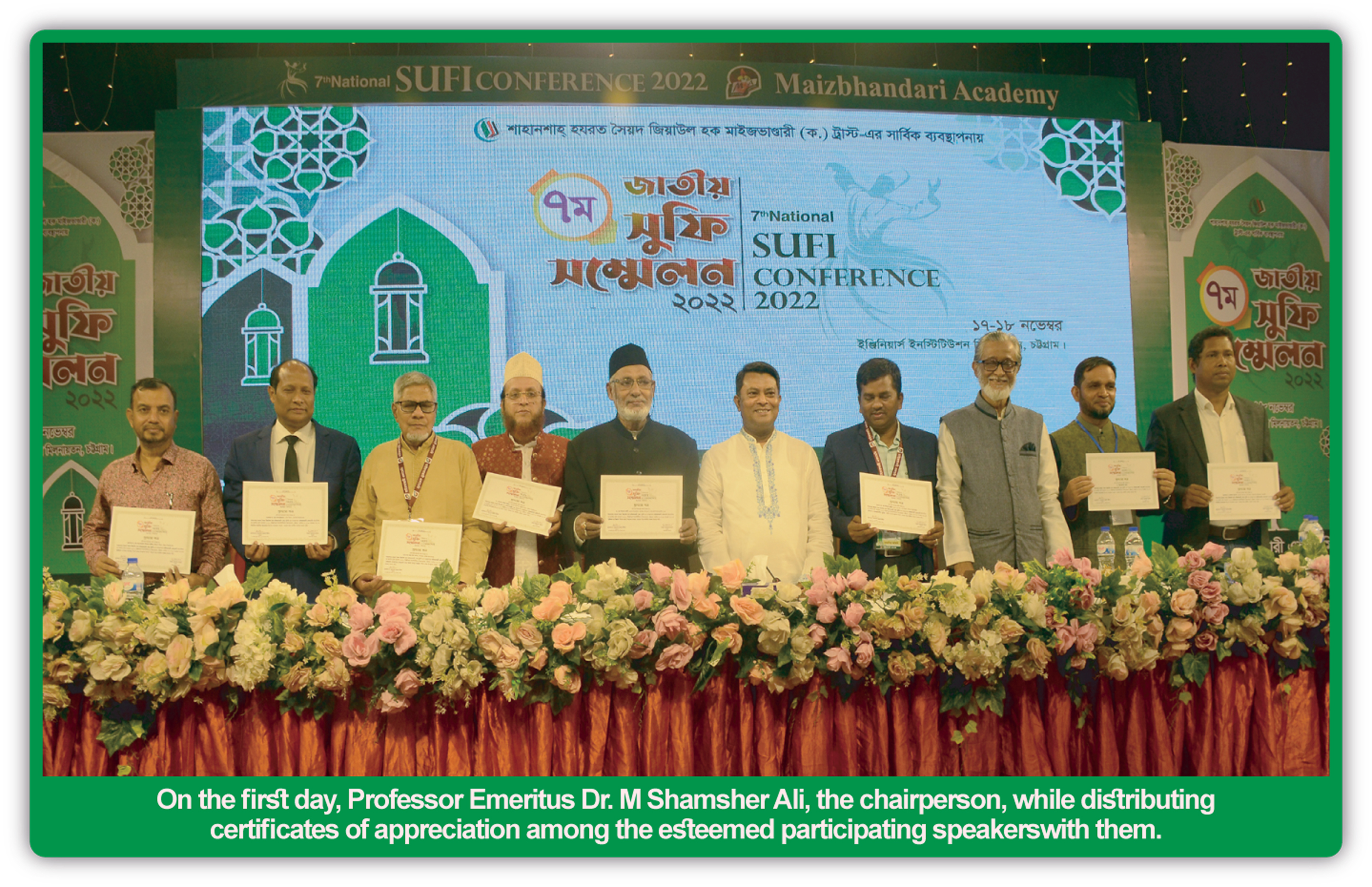
7th National Sufi Conference 2022
7th National Sufi Conference 2022 Date: 17 & 18 November 2022 Venue: Institute of Engineers, Chittagong, Bangladesh. Organized by: Maizbhandari Academy
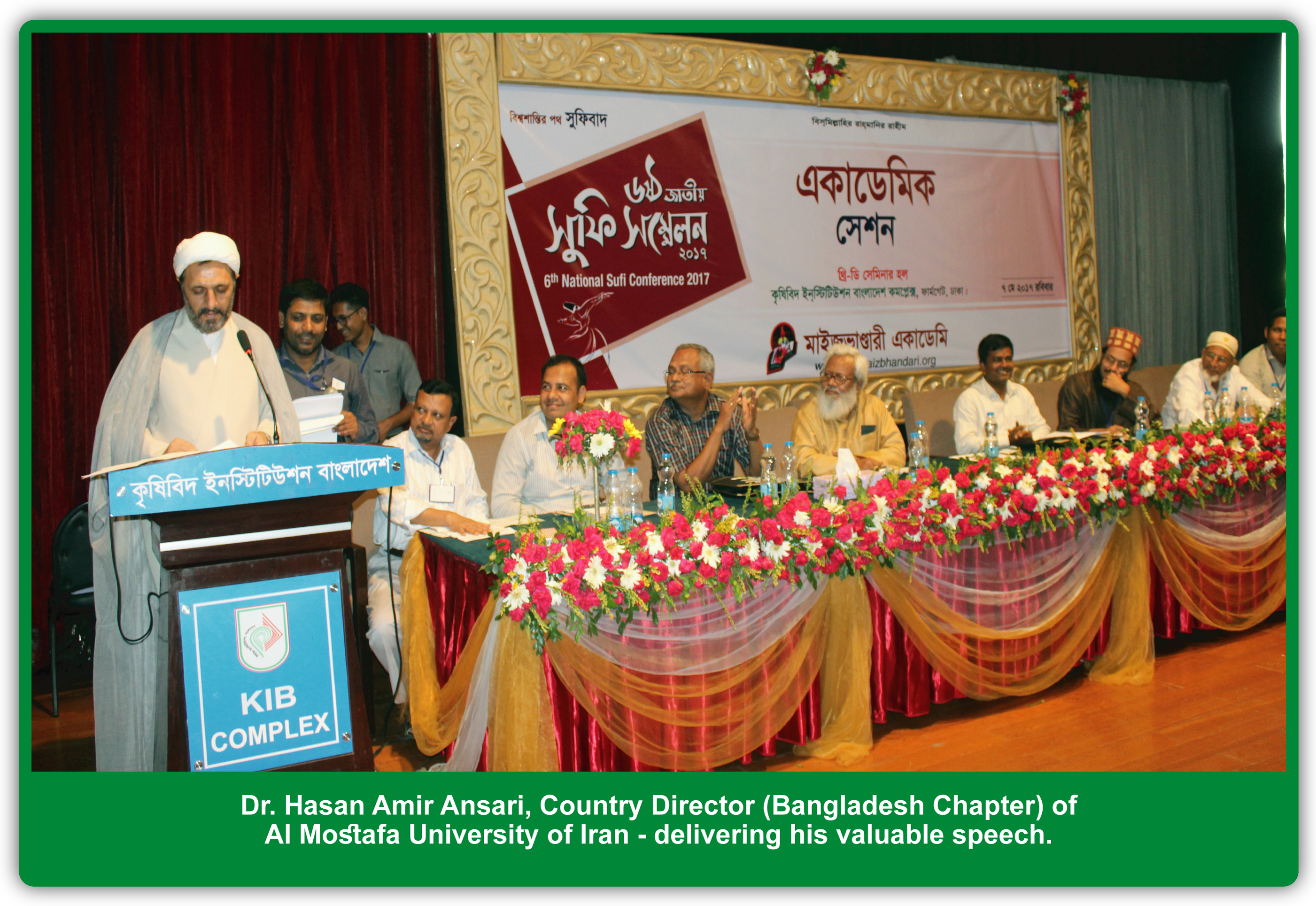
6th National Sufi Conference 2017
6th National Sufi Conference 2017 Date: 7 & 8 May 2017 Venue: Krishibid Institution Bangladesh Complex, Dhaka, Bangladesh. Organized by: Maizbhandari Academy
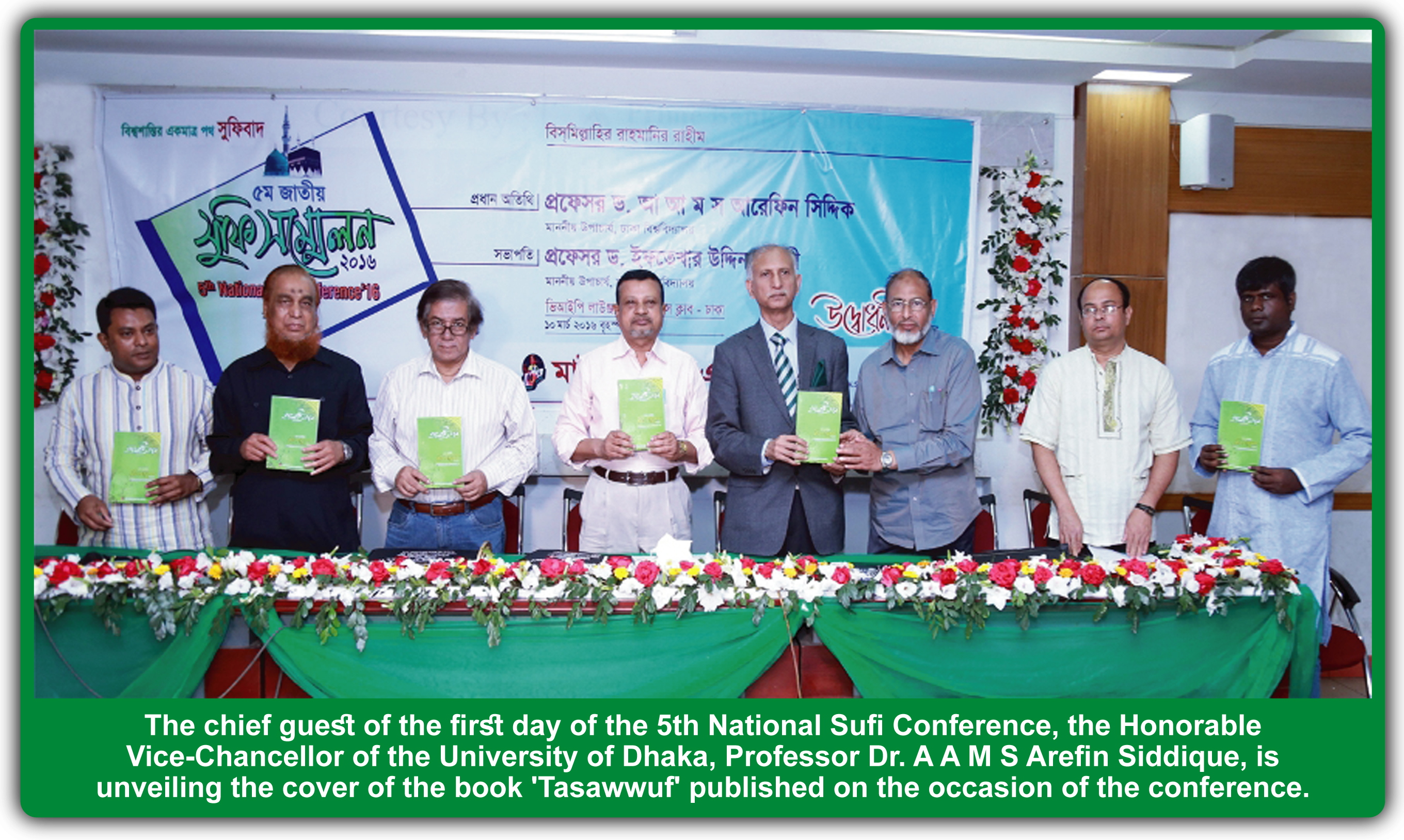
5th National Sufi Conference 2016
5th National Sufi Conference 2016 Date: 10 & 11 March 2016 Venue: National Press Club, Dhaka, Bangladesh. Organized by: Maizbhandari Academy
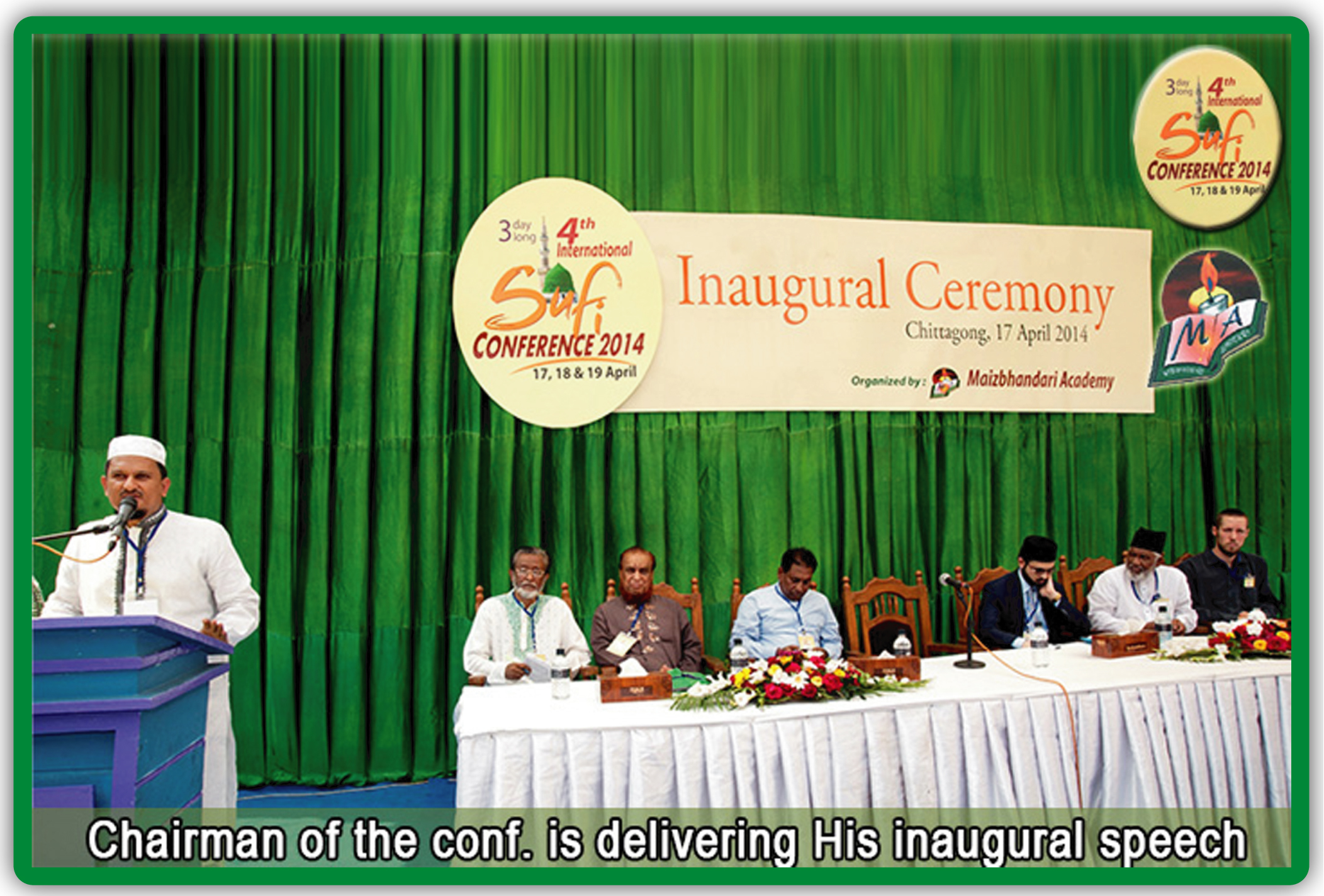
4th International Sufi Conference 2014
4th International Sufi Conference 2014 Date: 17, 18 & 19 April 2014 Venue: Institute of Engineers, Chittagong, Bangladesh. Organized by: Maizbhandari Academy
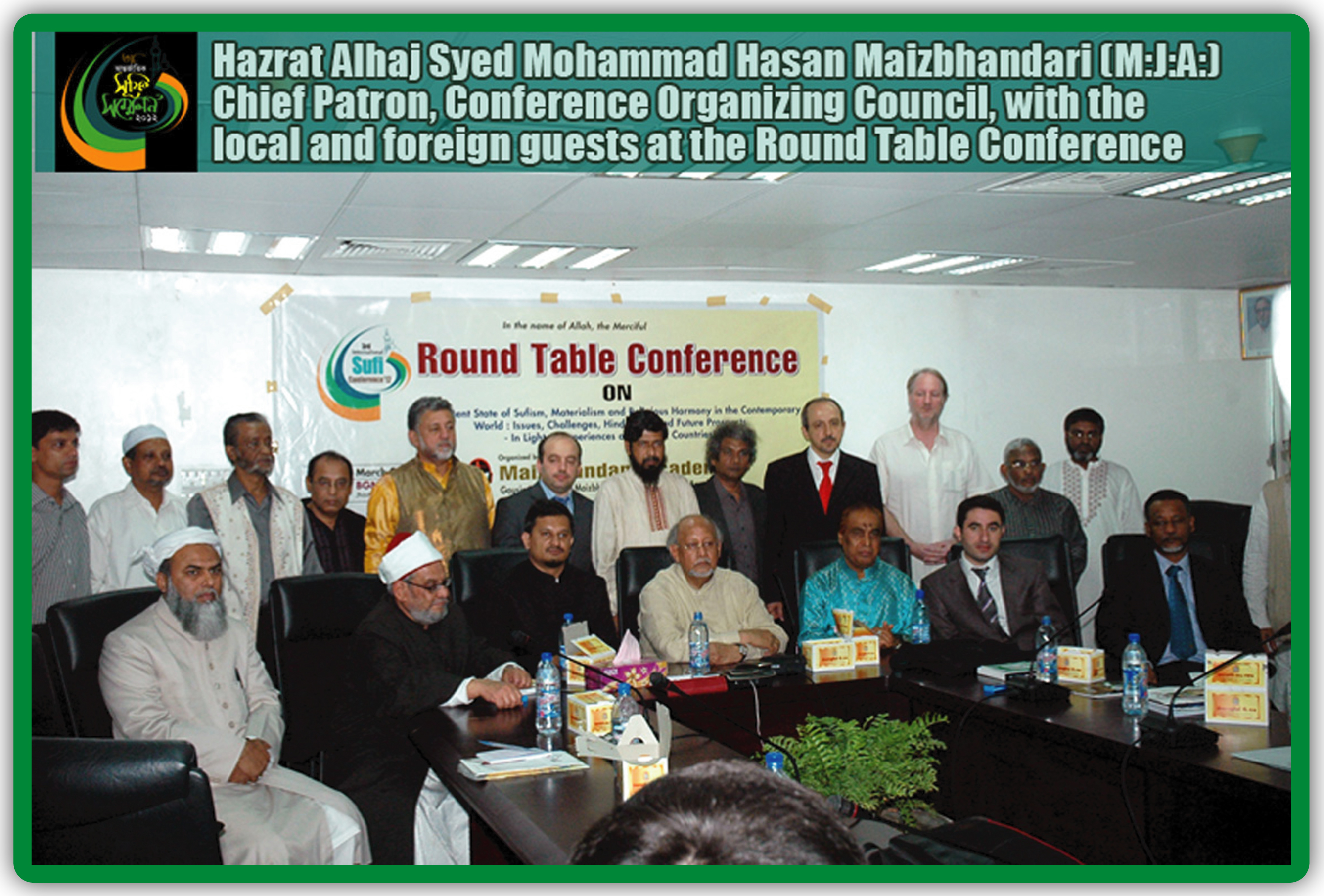
3rd International Sufi Conference 2012
3rd International Sufi Conference 2012 Date: 09 & 10 March 2012 Venue: Institute of Engineers, Chittagong, Bangladesh. Organized by: Maizbhandari Academy
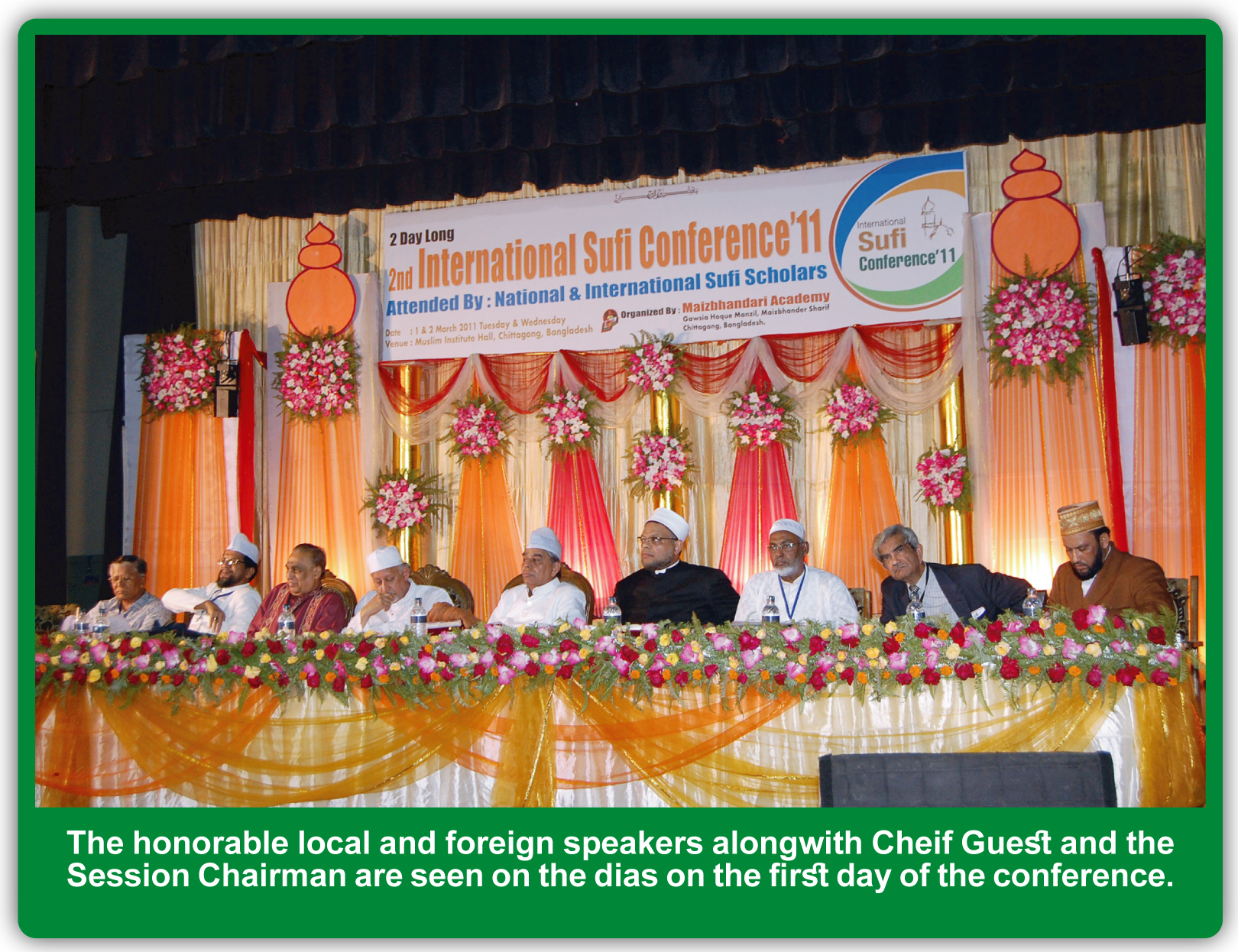
2nd International Sufi Conference 2011
2nd International Sufi Conference 2011 Date: 01 & 02 March 2011 Venue: Muslim Institute Hall, Chittagong, Bangladesh. Organized by: Maizbhandari Academy